Reflecting on America’s Influence: 250 Years of Shaping the World
As the United States commemorates its 250th anniversary, the Global Story has engaged audiences in a compelling examination of how America has impacted the global stage. This week marks a significant moment of reflection, where listeners are invited to explore the nuanced ways in which the U.S. has evolved—and continues to evolve—in its international relationships.
In a special collaborative episode with the Global News Podcast, hosts Tristan Redmond and Asma Khaled, alongside expert guests Jeremy Bowen and Celia Hatton, dive into listeners’ questions, probing perceptions of America over the decades. A hallmark of the conversation revolves around the dramatic shifts in global perceptions that have occurred since the aftermath of World War II.
In the immediate post-war period of 1945 to 1965, America emerged as a beacon of hope and prosperity. While its European allies were struggling to recover from devastation, the U.S. not only maintained its industrial strength but enhanced it. American goods, innovations, and cultural products entered European markets, contributing to a narrative of American ascendancy. The Marshall Plan served not only to rebuild ravaged economies but also to cement U.S. influence abroad. In those years, Coca-Cola became a symbol of this newfound relationship, representing American culture in West Germany and beyond.
As Jeremy Bowen points out, however, this admiration was not universal. Nations like Iran and Guatemala experienced the darker implications of American foreign policy. America’s prioritization of its interests often led to destabilization in countries with democratically elected leaders, from the overthrow of Iranian Prime Minister Mohammad Mossadegh in 1953 to interventions in Central America. By 1965, as U.S. involvement in Southeast Asia escalated, domestic turmoil loomed large with the civil rights movement, suggesting a fracture in the nation’s self-image.
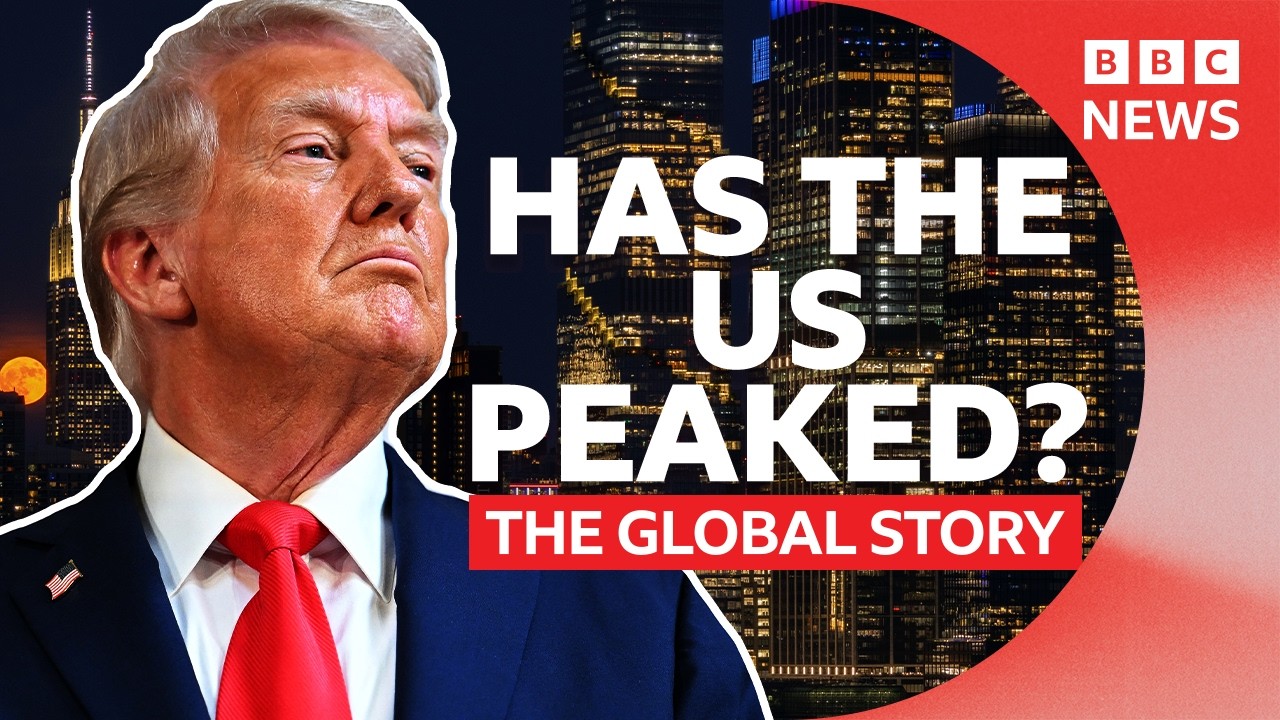
Fast forward to the contemporary era, and perceptions of America are decidedly more complex. Celia Hatton highlights how the recent tenure of Donald Trump fostered a notable shift in international attitudes. Many in the UK, where America once enjoyed robust support, now view the U.S. with skepticism. The phrase "America First" has led not only to questions about America’s role as a global leader but also a re-evaluation of alliances, especially with neighbors like Canada.
Listeners from various backgrounds contribute to this discussion, including Sonia from Canada, who expresses concerns about America’s retreat into isolationism. Hatton reflects on how this insular approach reverberates across borders, as Canada finds itself re-emphasizing its own identity in response to the unpredictable American political landscape. The resulting cultural and economic recalibration may well be indicative of a broader trend toward prioritizing national interests over international engagement.
This conversation touches upon a significant issue: the shaping of a new world order. Swarrett from India poses an essential query about India’s role in this shifting paradigm, highlighting its strategic autonomy while navigating ties to both the U.S. and traditional partners like Russia. Bowen notes the complexities faced by India as it extends its influence, superbly illustrating how countries today are often forced to balance their allegiances in a multipolar world.
Listeners recount the allure of the American dream, with stories reflecting transformative journeys. Immigration remains a vital aspect of America’s identity, where individuals from diverse backgrounds bring their aspirations for a brighter future. Yet Bowen cautions that the narrative surrounding the American dream is fraught with contradictions. Increasing economic inequality raises questions about who truly benefits from this dream and whether it retains its universal appeal.
Throughout their discussion, the guests emphasize that while America’s legacy is monumental, it is far from uncomplicated. The ideals of liberty and opportunity that attract immigrants often stand in stark contrast to the realities faced by communities grappling with systemic issues, both domestically and abroad.
In conclusion, the United States, as it celebrates its 250 years, stands at a crossroads. The conversation about its role in the world is vibrant yet fraught with challenges. As it moves forward, both its self-image and its global standing will undoubtedly continue to evolve, reflecting the complexities of a nation striving to balance its historic aspirations with contemporary realities. This commemoration serves as a timely reminder that reflecting on the past is vital for informing the future—a narrative that is still being written.